




The Three-Sided Network: Why Foodservice Marketplaces Only Work When Everyone Wins
TLDR
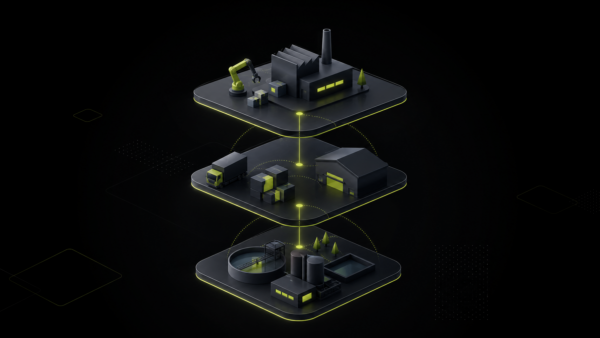
- Two-sided foodservice marketplaces reduce friction, but they often fail to create enough value to drive adoption at scale.
- Adding manufacturers creates a three-sided network where trade spend funds operator incentives and distributor growth.
- Manufacturer campaigns help operators discover products, distributors increase loyalty, and brands measure real ROI.
- Network effects compound as more operators create better data, better targeting, stronger campaigns, and more manufacturer spend.
- The foodservice marketplaces that win are the ones where distributors, operators, and manufacturers all benefit.
The Problem With Two-Sided Marketplaces
Most e-commerce platforms in foodservice are built on a two-sided model: distributors and operators.
Get operators to order digitally. Reduce friction for distributors. Build technology that makes the transaction easier. On paper, it makes sense.
In practice, it stalls.
Here’s why. The operator saves time by ordering digitally instead of calling a salesperson. But that time savings is small—maybe five minutes per order. The distributor gets data visibility and some operational efficiency, but if their real advantage is relationships and local knowledge, technology that only digitizes existing behavior rarely creates enough value to justify the switching cost.
The two-sided marketplace solves a friction problem, not a value problem. And friction problems, by themselves, don’t drive adoption at scale.
You need a third side.
Two-sided marketplaces make ordering easier. Three-sided networks make the entire channel more valuable.
The Third Side: Why Manufacturers Change Everything
When you add manufacturers to the model, the economics invert.
A manufacturer has a budget. Trade spend. Promotional dollars. Co-op funds. Money that’s currently allocated to distributor rebates, case discounts, and trade shows—mechanisms that are inefficient, hard to track, and impossible to attribute.
What if that money could be deployed directly to operators who are actually buying from a distributor who carries the manufacturer’s product? What if a manufacturer could see exactly which operators are underrepresenting their category and fund a targeted campaign to fix it?
Now the manufacturer has a path to incremental ROI. The operator gets a better deal. The distributor gets to retain the operator relationship while creating new revenue from manufacturer co-op.
The moment manufacturers have efficient access to their operator market, the network becomes valuable to everyone at once.
When a manufacturer-funded campaign drives $14 in sales for every $1 in spend—which is what the data shows across Cut+Dry’s network—that manufacturer is going to keep running campaigns. The distributor is going to want more campaigns to run because they drive operator frequency and loyalty. The operator is going to see better deals and better product discovery than they would’ve gotten from a pure two-sided model.
None of those things happen in a two-sided marketplace.
How Network Effects Actually Compound
This is where the real mathematics of three-sided networks emerges.
In a two-sided marketplace, growth is linear. Each new operator adds utility for distributors; each new distributor adds utility for operators. You get adoption, but the incentives aren’t asymmetric. No one is pulling the other sides in.
In a three-sided marketplace, growth is compounding.
More operators on the platform = better data visibility for manufacturers = more manufacturer campaigns = more funding for distributor promotions = higher operator loyalty = more operators joining.
The causality flows in multiple directions:
- Manufacturers fund campaigns.
- Distributors execute them.
- Operators get better deals.
- Operators order more frequently.
- More frequency creates better data.
- Better data improves campaign targeting.
- Better targeting increases ROI.
- Higher ROI attracts more manufacturer spend.
The system reinforces itself.
We see this in the aggregate data. When Cut+Dry reached 140,000+ operators on the platform, the number of manufacturer Influence campaigns running each month increased proportionally. When campaign volume increased, the quality of the campaigns improved because we had better data to target against. When quality improved, ROI improved. When ROI improved, manufacturers allocated larger budgets to those campaigns.
That’s not linear growth. That’s exponential.
The Distributor’s Structural Advantage
Here’s the thing that makes a three-sided network uniquely powerful for distributors.
A distributor’s core advantage has always been the relationship. But relationships without data are relationships flying blind. You know your customer, but you don’t know which products they should be ordering, which categories they’re underrepresenting, or how your product mix compares to competitors they might be shopping.
A two-sided marketplace gives you visibility into your operator’s ordering behavior. That’s useful.
A three-sided marketplace gives you that visibility plus the ability to execute manufacturer-funded campaigns that move the needle on those operators. You’re no longer just taking orders. You’re creating new product discovery at scale. You’re deploying manufacturer spend efficiently. You’re keeping operators from shopping competitors because you’re giving them access to deals and visibility they wouldn’t get anywhere else.
The distributor becomes the distribution layer for manufacturer influence. Not an intermediary who’s getting disintermediated. The essential infrastructure.
In a three-sided network, the distributor’s relationship advantage becomes unfungible. You can’t replace it. You can only amplify it.
That’s only true if the network actually connects manufacturers to the operators the distributor serves.
Why Operators Order Faster (and Buy More)
The operator side of this story is simpler but equally important.
When an operator places an order on a digital platform, they’re doing two things: (1) they’re ordering products they already know about, and (2) they’re discovering products they didn’t know their distributor carried.
In a two-sided marketplace, product discovery is passive. Browse the catalog. Hope it’s organized well. Maybe find something new.
In a three-sided marketplace, product discovery is active. A manufacturer funding a promotion puts a financial incentive in front of an operator for a product the operator might not have tried. A distributor managing a campaign understands the operator’s menu and can target the manufacturer’s products that actually fit.
Operators order with higher frequency because they’re constantly seeing products they want to try. They order with higher average values because they’re getting exposure to products they wouldn’t have discovered on their own.
That’s the operator’s side of the value prop. More efficient ordering. Better access to new products. Better deals because manufacturer spend is flowing through the distributor.
The Network Hits Critical Mass
We’re watching this happen in real time.
At 220+ distributors on the Cut+Dry network, the volume of manufacturer campaigns running monthly hit an inflection point. At 140,000+ operators, the data quality on those campaigns reached a level where attribution got precise enough to make spending decisions simple for manufacturers.
At $22 billion in tracked GMV, the scale of the dataset is large enough that we can see patterns that weren’t visible at smaller scale.
This is the moment where a three-sided network stops being a platform and starts being infrastructure.
The distributors aren’t thinking about adoption anymore. They’re thinking about campaign velocity, about manufacturer engagement, about how to keep their operators discovering products. The manufacturers aren’t asking whether the model works. They’re asking about budget allocation and how to expand their footprint across the distributor network.
The operators are ordering more frequently and with higher AOV because the friction is gone and the value prop is clear.
That’s compounding growth. That’s what a three-sided network looks like when it’s working.
The Two-Sided Failure Mode
For context, here’s what happened to the platforms that tried to stop at two sides.
Some pure-play e-commerce tools built beautiful digital ordering interfaces. They signed up operators. They got distributors to integrate. The technology worked well.
And then growth stopped.
Because the distributor had no manufacturer-driven reason to push adoption. The operator had no reason to order digitally instead of calling a familiar salesperson. The adoption was coming from top-down mandates, and mandates don’t scale beyond early adopters.
The platforms that are still growing are the ones that figured out how to make manufacturers efficient participants in the network. Not as data sources. As active participants funding campaigns that create real value for the distributors and operators moving the product.
What Three-Sided Means for You
If you’re evaluating a foodservice marketplace, ask one question: do manufacturers have a direct path to reach the operators you serve?
If the answer is no, you’re looking at a two-sided marketplace with a friction-reduction thesis. That works for some categories. But in foodservice distribution, friction is only part of the problem. Value creation is the real test.
If the answer is yes, and if manufacturers can fund campaigns that drive real ROI, then you’re looking at a three-sided network with compounding mechanics. That’s where the actual growth happens.
The gap between two-sided and three-sided isn’t philosophical. It’s measurable. It’s in the campaign ROI numbers. It’s in operator ordering frequency. It’s in the manufacturer budgets that keep expanding because the channels actually work.
The independent foodservice distribution market is being rebuilt around the networks that got the three-sided math right.
If you’re evaluating platforms for your distributor network, the real question is whether manufacturers can actually move product through your channels. We’d like to share what we’re seeing on the Cut+Dry network around the three-sided model.