




The Meat Distributor Playbook for Growing Average Order Value

TLDR
- Meat distribution has unique AOV opportunities because chefs buy based on brand, cut, grade, aging, origin, and menu positioning.
- Premium brands like Certified Angus Beef can drive higher-margin discovery when surfaced inside the ordering experience.
- Enriched catalog data helps operators understand premium options instead of defaulting to commodity reorders.
- Manufacturer Influence campaigns can increase premium product attach by showing relevant upgrades at the moment of ordering.
- Meat distributors grow AOV by combining catalog enrichment, intelligent recommendations, and manufacturer-funded campaigns.
The Meat Distributor’s Hidden Economics
When a restaurant orders meat, they’re not ordering protein in bulk. They’re ordering something much more specific.
The head chef at an upscale steakhouse isn’t buying “beef.” They’re buying USDA Prime New York Strip. Certified Angus Beef ribeye. Grass-fed filet mignon. Each has a different cost basis. Each has a different margin profile. Each signals something different to the diner about the restaurant’s positioning.
This is why meat distribution is so different from other categories. The buyer cares about specifications at a level that matters commercially. Brand. Cut. Grade. Aging. Origin. These aren’t details. They’re the product.
And this is where most meat distributors are leaving money on the table.
The typical ordering conversation for a meat distributor still looks like this: the restaurant calls, orders what they’ve always ordered, maybe asks about a special or a promotional item, and hangs up. The distributor delivers what was ordered. The conversation is transactional.
Meanwhile, the chef’s menu is changing. New concepts are opening. Operators are upgrading their protein positioning. And the meat distributor isn’t in the conversation about how to do that because the ordering channel is still designed for commodity reordering, not premium product discovery.
How Premium Brands Are Using Distributors as Distribution Channels
This is where the manufacturer play comes into the picture.
A company like Certified Angus Beef invests heavily in the steakhouse segment. They run advertising. They educate chefs about their product. They want to see their beef on menus in premium restaurants. But they can’t sell directly to the restaurant. They sell through the distributor.
The distributor is the channel. But for years, the distributor’s ordering system was just a place to reorder commodity products. The special steakhouse beef, the premium items, the branded products that carry higher margins and higher brand value—those lived in a separate conversation. Or worse, they got lost because the chef didn’t know they were available.
Now this is starting to change.
The meat distributors who are growing average order value fastest are the ones connecting manufacturer brands directly to the operator discovery process. Not as pushy upsells. As intelligent recommendations based on what the operator is actually ordering and building.
The premium beef campaign that works is the one where the chef discovers it while placing their regular order, not the one they have to ask for.
Certified Angus Beef is finding that when it’s surfaced intelligently in the operator’s ordering interface—not as a discount, but as a premium alternative to commodity beef—adoption increases. Operators who were buying commodity grade beef are discovering they can upgrade to certified branded beef at price points they didn’t know existed. The manufacturer gets distribution. The distributor gets margin. The operator gets a better product. The chef gets to upgrade their menu.
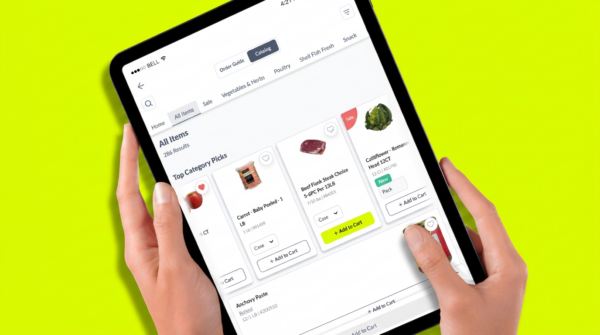
This requires the ordering platform to do three things: catalog the full range of products including branded premium items; understand what the operator is currently ordering; recommend intelligently based on that context.
Catalog Enrichment: More Than Just Data Entry
Most meat distributors have product catalogs that are incomplete in the ways that matter.
They have commodity beef. They have chicken. They have pork. But the catalog data itself—the brand information, the cut specifications, the grading data, the origin information—is often thin or missing entirely.
A catalog entry might be “Beef Ribeye—10oz—Prime” when the full picture is much richer. What brand? Is this Certified Angus Beef or commodity prime? What’s the source? Is it domestic or imported? Is it wet-aged or dry-aged? What’s the trim? These details matter commercially, and they’re often missing from digital ordering systems because those systems were designed for commodity products, not premium positioning.
When a meat distributor invests in catalog enrichment—actually completing the product information, adding brand associations, categorizing by premium tier—they create the foundation for intelligent recommendations. The operator can see not just that ribeyes are available, but which ribeyes, at what price points, with what premium positioning.
This is foundational to growing AOV.
Across 220+ distributors in the network, the ones seeing the biggest AOV lift in meat categories are the ones with enriched catalogs. When a chef can actually see and understand the difference between commodity prime and Certified Angus, they’re more likely to order the Certified Angus. When they can see dry-aged options, they’re more likely to try them.
The distributors aren’t selling harder. The operators are buying better because the information is actually there.
Influence Campaigns: Manufacturer Fuel for Premium Attach
Here’s where manufacturer-funded campaigns become the engine for AOV growth.
Certified Angus Beef has a vested interest in getting their product in front of high-end restaurants. They want to build menu presence. They offer the distributor promotional support: special pricing, cooperative marketing funds, maybe even some co-op advertising for the restaurant.
The challenge is making that campaign tangible. How does a Certified Angus promotional offer actually reach the chef? How does the operator actually discover it and take advantage of it?
Most of the time, it doesn’t. The promo lives in an email. Or a separate price file. The chef doesn’t see it when they’re placing their actual order. By the time they remember the promotion exists, they’ve already placed the order.
The distributors using influence campaigns effectively are the ones embedding the manufacturer promotion directly into the operator’s ordering experience. When the chef is placing their ribeye order, the system says “Hey, Certified Angus has a special running on ribeye this week.” Not a discount on the product they’re ordering anyway. A recommendation for a premium upgrade.
The data across the network shows that this kind of embedded manufacturer influence is driving measurable ROI. 13.9x ROI on manufacturer Influence campaigns. For every dollar Certified Angus invests in a campaign, the distributor is driving roughly $14 in sales of that beef.
McCormick drives $100M in annual sales through Cut+Dry distributor partners. That’s not because Sysco got out of the spice business. That’s because the independent distributors have built platforms where manufacturer recommendations actually reach operators when they’re placing orders.
Why Traditional Meat Distributor Sales Models Are Leaving Money on the Table
The old model is still common: the distributor employs a sales team that calls on restaurants and pitches products. The salesperson builds relationships. They know which chefs like grass-fed beef. Which restaurants care about Certified Angus positioning. Which concepts are upgrading their protein strategy.
That salesperson is valuable. But they can only visit so many accounts. They can only have so many conversations. And when they’re not on the phone, the operator is placing their order through whatever system exists, which often doesn’t even show the premium products the salesperson was pitching.
The distributors who are scaling fastest are the ones amplifying their sales team with digital tools. The salesperson builds the relationship. The ordering platform makes the recommendation. The operator discovers the product while placing an order, not waiting for the next salesperson visit.
This isn’t replacing the sales relationship. It’s multiplying it.
The Numbers Behind Premium Attach
When you look at the data across meat distributors in the network, the pattern is clear.
Distributors with enriched catalogs (brand data, cut specifications, premium tiers visible to operators) see 18-25 percent higher attachment rates on premium items compared to distributors with basic catalogs.
Distributors running manufacturer influence campaigns through intelligent recommendation see 30-40 percent conversion lift on promoted items when those promotions are embedded in the ordering experience, versus when they’re communicated separately.
These aren’t massive changes to the operator’s ordering behavior. But across hundreds or thousands of orders per week, 20-30 percent lift on premium item attachment translates directly to AOV growth.
A distributor doing $2M per week in GMV with a 3 percent lift in AOV is now doing $2.06M per week. That’s $3M per year in incremental revenue at similar margins. That’s meaningful.
The meat distributor who connects manufacturer brands to operator discovery is the one multiplying their sales team, not replacing it.
Building the Playbook for Your Operation
If you’re a meat distributor, the playbook is getting clearer. Catalog enrichment. Intelligent recommendations. Manufacturer campaign integration.
You probably already have manufacturer relationships. Certified Angus. Grass-fed beef suppliers. Premium pork brands. These manufacturers want their products in restaurants. They’re willing to fund campaigns. The missing piece is usually the channel to make those campaigns visible to operators when it actually matters—when they’re placing their order.
The distributors who’ve built that capability are seeing measurable AOV growth and margin expansion in meat categories. Not because they got new customers. Because they’re selling differently to the customers they already have.
Across 140K+ operators ordering through independent distributor platforms, meat is one of the highest-AOV categories, and that AOV is growing as manufacturers and distributors align around catalog richness and intelligent influence campaigns.
If you’re a meat distributor exploring catalog enrichment and manufacturer influence integration, we’d love to show you how premium brand positioning is driving AOV growth for distributors in your category.