




Foodservice Consolidation Is Here. Will Independents Use It or Get Used by It?

TLDR
- Foodservice consolidation is accelerating, but independent distributors still control a massive and valuable market.
- The Sysco-Jetro deal signals that independent-style distribution is becoming more valuable, not less.
- Operators are seeking alternatives when they need flexibility, specialization, local relationships, and better product access.
- Technology helps independents compete by adding digital ordering, data visibility, and manufacturer campaign infrastructure.
- The independents that win will not try to match Sysco’s scale — they’ll use technology to own the operators who value independence.
The Sysco-Jetro Moment Changed Everything
When Sysco announced it was acquiring Jetro Restaurant Depot for $29.1 billion, the story everyone told was: “Consolidation is accelerating. The Big 3 are taking over.”
That’s partially true. But it misses the more important story underneath.
The Big 3—Sysco, US Foods, Performance Food Group—already control roughly $200 billion in annual foodservice distribution. They have the trucks, the warehouses, the national accounts, and the scale to negotiate supplier prices nobody else can touch.
If consolidation was the threat, that threat already existed.
The Jetro acquisition wasn’t about Sysco needing more distribution. It was about Sysco recognizing that the cash-and-carry model—the model that serves thousands of independent restaurants and small operators—was becoming more valuable, not less, as those operators digitized their ordering.
That matters. Because it signals that the $200 billion in foodservice distribution flowing through independent and regional distributors isn’t being squeezed out. It’s being actively fought over.
And the fight is about technology.
Consolidation does not erase the independent market. It makes the best independent distributors more valuable.
The $200 Billion Market That Isn’t Going Away
Let’s be specific about the size and shape of independent foodservice distribution.
The Big 3 move roughly $200 billion in foodservice products annually. The rest of the foodservice supply chain—regional distributors, specialty producers, ethnic food specialists, restaurant-focused independents, seafood and produce distributors—move another $200 billion plus.
That $200 billion is fragmented. It’s not organized into national chains. It’s relationships built over decades in specific geographies and specific product categories.
For 50 years, the conventional wisdom was that scale would eventually win. The Big 3 would keep growing, and the independents would either get acquired into consolidation or slowly squeeze out of existence.
That narrative persists. But the data contradicts it.
The $200 billion independent market hasn’t contracted. It’s stabilized. And it’s about to be the most valuable it’s ever been, because the operators who value it most are the ones who are actively seeking non-Big-3 options.
The consolidation moment is an opportunity, not a threat, if you have the infrastructure to capture it.
Why Operators Are Actively Seeking Alternatives
Here’s what’s actually happening in operator purchasing behavior.
Sysco and US Foods are national. They’re standardized. They’re optimized for scale. An operator buying from Sysco gets consistent pricing, national accounts, reliable supply.
But an operator buying from Sysco also accepts limitations. Standardized packaging. Limited customization. Pricing power that flows to the biggest accounts, not the regional ones. Relationships that are built around account size, not around what the operator actually needs.
The operators who have alternatives are increasingly taking them.
A restaurant group with 10 locations wants to buy organic produce from a local producer. Sysco carries organic produce, but the pricing and selection are designed for their largest accounts. The local distributor gives them access to the producer directly.
A regional ethnic restaurant wants to source authentic ingredients. US Foods has them, but the selection is limited to what’s profitable at national scale. The ethnic food distributor has relationships with 50 suppliers who can serve that need.
A chef-driven fine dining group wants to control their supply chain. Performance Food Group will accommodate them, but with minimum order volumes and account-based pricing. An independent distributor can customize.
These aren’t edge cases. They’re core to how specific operators want to do business. And they’re willing to pay for that flexibility.
Technology as the Equalizer — For Real This Time
For decades, “technology as the equalizer” was cliché in foodservice distribution. Every solution provider promised that digital ordering would let independents compete against Sysco.
It didn’t, because ordering wasn’t the constraint. Sysco’s constraint was relationships and flexibility. Digital ordering didn’t change that.
What’s changed now is that technology enables independents to do what they’ve always done better—build local relationships, customize for specific customers, deploy capital efficiently—and layer data visibility on top.
An independent distributor with 500 restaurant accounts doesn’t need to become Sysco. They need to:
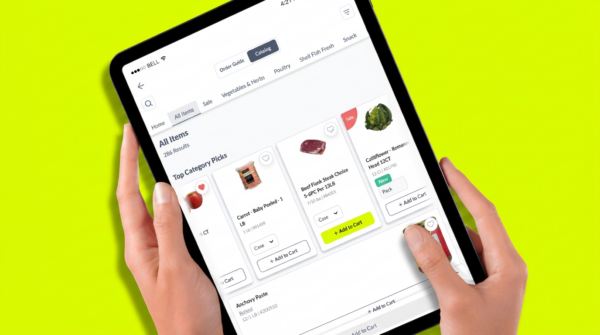
- Make it easy for their 500 accounts to order digitally
- Get visibility into what those accounts are ordering
- Deploy manufacturer partnerships efficiently
- Understand which accounts are growing and which are declining
None of those things require becoming a national distributor. They require technology that amplifies what makes independent distributors good at their job.
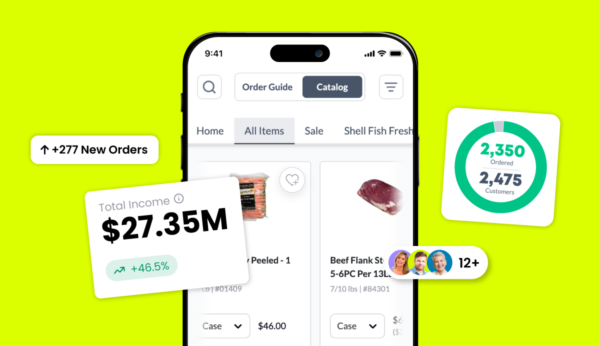
We’re watching this happen. Across 220+ independent distributors on the Cut+Dry network, the operators who can order digitally order with higher frequency (20-30% increase) and higher average order values (15-25% increase). The distributors get data visibility that lets them deploy manufacturer co-op more efficiently.
Operators who had been shopping the Big 3 because of convenience are staying loyal to their independent distributor because the digital experience is now competitive.
What the Jetro Acquisition Actually Signals
Sysco didn’t buy Jetro to shut it down. They bought it to integrate it.
The Jetro model—cash-and-carry, small and medium operators, regional flexibility—serves an operator segment that’s valuable to Sysco’s business. But it’s also a segment that’s increasingly valued by operators who want alternatives to Sysco’s main platform.
By owning both Sysco and Jetro, Sysco is hedging. They’re saying: “If operators want standardized scale, buy from Sysco. If operators want flexibility and regional focus, buy from Jetro.”
What Sysco is implicitly admitting by making that move: the $200 billion independent market isn’t going away, and it’s becoming more valuable because operators are actively choosing it.
For independents not owned by Sysco, that’s the signal that matters. The Big 3 aren’t trying to eliminate the independent market. They’re trying to own as much of it as possible.
That means the question for independent distributors isn’t “how do I survive consolidation?” The question is “how do I win the operators who are actively seeking non-Big-3 options?”
How Independents Win Against the Big 3
It’s worth being honest about what independents can’t do.
They can’t match Sysco’s pricing power on bulk commodities. They can’t offer the same national account infrastructure. They can’t compete on pure scale.
But they can do things Sysco can’t.
They can customize. They can move fast. They can build relationships with suppliers and operators that are specific to their market. They can understand their territory in ways that a national distributor can’t.
The technology that’s winning in foodservice right now is the technology that amplifies those advantages.
When an operator in a specific region needs a specialized product that Sysco doesn’t stock, they call their independent distributor. They’ve been doing that for 30 years. What’s different now is that the independent distributor can:
- Take that order digitally instead of through a phone call
- See the demand signal in their data (that operator orders this product every month)
- Approach a manufacturer about a co-op deal to promote that product category
- Run a targeted campaign to other operators in the region
That’s not something Sysco does better. Sysco is too big to care about a regional demand signal for a specialty product. Sysco is too standardized to customize campaign execution.
The independent distributor is in the perfect position to move fast, be responsive, and turn customer demand into manufacturer partnerships that other distributors won’t pursue.
The Consolidation Opportunity
Here’s what we’re watching happen in real time.
Operators are actively seeking independent alternatives. Technology is making it possible for independents to deliver digital experiences that are competitive with the Big 3. Manufacturers are realizing they can reach those operators more efficiently through independent distributors than through Sysco’s consolidated infrastructure.
McCormick is doing $100 million in annual sales through Cut+Dry independent distributor partners. That’s not happening because Sysco forced it. It’s happening because the channel works.
The independents who have moved fastest into technology are seeing:
- Higher operator loyalty (operators are less likely to shop Sysco because they have a good digital experience)
- Higher order frequency (operators order more often when it’s easy)
- Manufacturer partnerships that drive incremental revenue (co-op campaigns that wouldn’t exist on a Sysco platform)
That’s the consolidation opportunity. Not “fight Sysco for market share.” But “own the operators who value independence.”
What Happens Next
The Big 3 consolidation is real. Sysco will continue to integrate Jetro. Other mega-acquisitions will happen. The gap between the largest distributors and everything else will widen on pure scale.
But scale isn’t what creates loyalty anymore. Access is.
An operator wants to order the products they want from the suppliers they trust, at prices they can defend. A digital platform from an independent distributor can offer that. A consolidated Sysco platform optimized for national accounts and bulk commodity pricing can’t.
The $200 billion independent market is consolidation-proof because it’s built on optionality. Operators have choices. They’re using those choices to stay with independent distributors who understand their specific needs.
The independents who win in the next three years will be the ones who recognized that consolidation is the signal that technology matters more than ever. Not to compete on Sysco’s terms. To own the market Sysco doesn’t want.
If you’re an independent distributor trying to understand how to compete in a consolidated market, we’d love to share what the 220+ distributors on the network are learning about how to win without matching Sysco’s scale.