




Digital Ordering for Produce Distributors: Why the Rules Are Different
TLDR
- Produce distribution has different digital ordering needs because pricing, availability, and quality change constantly.
- Generic e-commerce platforms fail because produce buyers need real-time specs, pricing, availability, and relationship context.
- Fleet management and proof of delivery are critical because margin depends on freshness, cold chain integrity, and delivery accuracy.
- Real-time pricing is table stakes for produce distributors, not a nice-to-have feature.
- The best produce distributors are building systems around produce economics, not adapting generic ordering tools.
The Produce Distributor’s Supply Chain is Nothing Like Grocery Delivery
When most of the foodservice industry talks about digital ordering, they’re talking about shelf-stable products. A case of canned goods. A box of frozen items. A pallet of dry goods. You price it once, you stock it, you deliver it on a set schedule.
Produce doesn’t work that way.
A produce distributor’s supply chain is built around perishability windows measured in days, sometimes hours. Pricing that changes daily based on market conditions. Delivery routes that are optimized around what’s actually available, not what’s on the order. A buyer (the chef, the produce manager) who cares deeply about specification: size, ripeness, origin, even the specific day it was harvested.
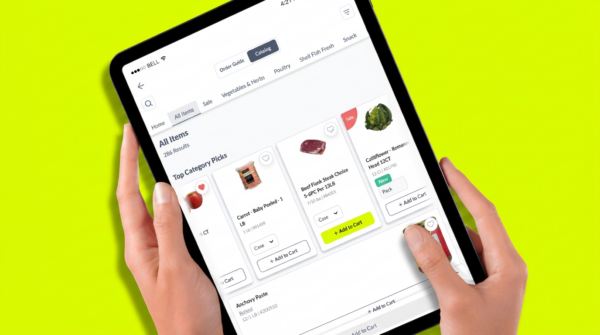
The produce industry has been digital for a while, but mostly in the back office. Price files uploaded to internal systems. Demand forecasts built on legacy EDI. Order entry done over the phone because the complexity of pricing and availability can’t be simplified into a generic storefront.
That’s starting to change. But it’s not changing the way the technology vendors think it will.
Why Generic E-commerce Platforms Fail at Produce
Some platforms have decided that digital ordering for produce is just digital ordering for anything else, with a few tweaks. Real-time pricing integration. A perishability flag. Maybe some supply constraint management.
The problem is deeper.
A produce distributor’s operator (the restaurant, the hotel, the institutional buyer) isn’t just selecting a SKU. They’re negotiating specification. They’re asking questions that don’t have preset answers. “What’s the size on the iceberg lettuce this week?” “Are you getting California romaine or Arizona?” “What day would that arrive?” “Can you do 30 pounds of hand-selected tomatoes for Saturday?”
Generic platforms treat produce like any other category with a SKU field and a quantity field. Produce distributors know the reality is messier.
“The chef isn’t buying a product code. They’re buying a relationship with someone who knows what’s actually available this week and can deliver it the way they need it.”
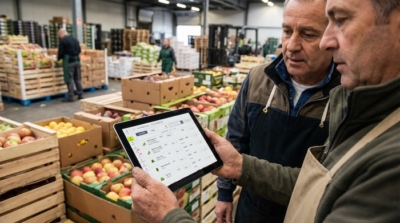
The distributors who have gotten digital ordering right for produce aren’t replacing the relationships. They’re augmenting them. They’re building systems that let the order-taker understand what’s available in real time, what the pricing is, what the specification constraints are, and then surface that information to the chef in a way that actually helps the buying conversation.
This requires infrastructure that pure-play e-commerce platforms simply haven’t built. Because they’re not designed for it.
Fleet Management and Proof of Delivery Are Where Margin Lives
Here’s what most people don’t understand about produce distribution: your margin isn’t just in the spread between your cost and your selling price. It’s in your logistics.
A produce distributor’s truck fills with items that have different perishability windows. Some items can handle temperature variation. Others can’t. Some items are dense and stack well. Others bruise if you even stack them too aggressively. The route itself matters. A delivery to a restaurant downtown has different requirements than a delivery to a rural hotel.
The distributor who can optimize their route to match load composition, delivery sequence, and perishability constraints is the one who actually delivers margin. You’re not just moving boxes. You’re managing cold chain integrity, handling time, and delivery window specificity that directly impacts the product quality the chef receives.
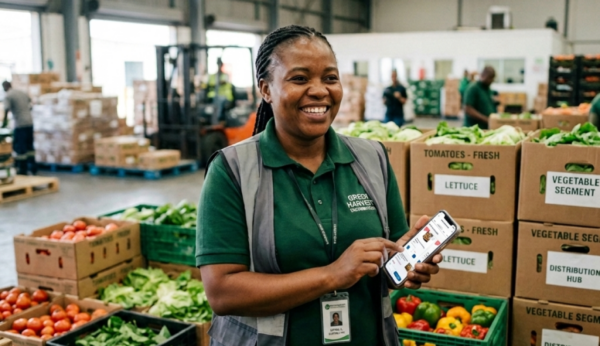
This is why proof of delivery matters in produce. Not just as a compliance checkbox, but as evidence of cold chain maintenance. Photo at pickup. Temperature log during transport. Photo at delivery. Data that actually means something to the chef because they care about whether the produce arrives in the condition they need it.
Some platforms are starting to integrate fleet management, but mostly as an afterthought. For produce distributors, fleet management isn’t an add-on. It’s foundational to the margin story.
Real-time Pricing is Non-negotiable
Produce prices move daily. Sometimes multiple times per day during peak season.
A produce distributor’s pricing structure isn’t a SKU price with occasional promotions. It’s a market-responsive system where the cost basis changes and the distributor needs to update selling prices to maintain margin while staying competitive.
This means the digital ordering system doesn’t just need to show accurate prices. It needs to show them in real time. And it needs to handle the scenario where a chef sees a price, starts composing an order, and by the time they’re halfway through, the price has shifted because market conditions changed.
Generic platforms typically batch update pricing once or twice per day. For produce, that’s not close to good enough.
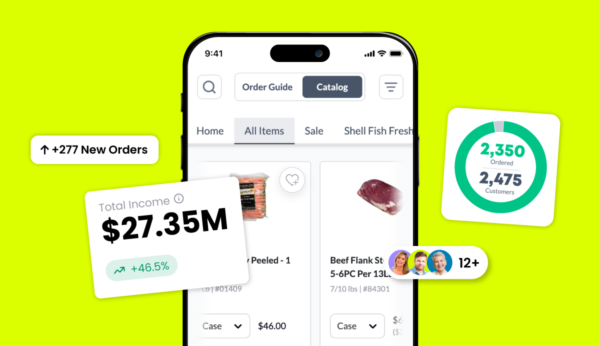
The platforms that matter in produce are the ones building pricing as a real-time data layer. Where the price the chef sees on screen is the price they’ll pay, and the ordering system handles the margin impact of real-time market moves automatically.
This is infrastructure. It’s not a feature. And it’s table stakes for any digital ordering platform that wants to matter in produce.
Why the Best Produce Distributors are Building Specialized Systems
The largest produce distributors in the country have been quietly building digital capabilities for years. Not because they wanted to be tech companies, but because the economics of their business demanded it.
They needed to handle daily pricing updates across thousands of SKUs. They needed to track perishability windows and manage inventory rotation. They needed to understand which operators were actually using which products so they could forecast demand accurately. They needed to deliver proof of delivery that meant something to the chefs they serve.
The ones who did this well didn’t start with generic e-commerce platforms and bolt on produce-specific features. They started with the produce supply chain and built digital ordering around that reality.
This is the kind of infrastructure a network like Cut+Dry has been building. Across 220+ distributors and 1.7M SKUs, the produce category requires systems purpose-built for how it actually works. Real-time pricing. Specification-aware ordering. Proof of delivery with cold chain data. Fleet optimization built for perishability constraints.
It’s not that produce is too complicated for digital ordering. It’s that produce requires digital ordering to be purpose-built for produce economics, not adapted from generic platforms.
“The distributor who can make digital ordering work for produce is the one who wins the chefs that matter most.”
The Shift is Already Happening
Across the 140K+ operators ordering through independent distributor platforms, produce is one of the highest-velocity categories. Not because produce distributors got lucky with technology. Because they’re building the technology around their actual supply chain.
The chefs are demanding it. They want to see availability in real time. They want to understand pricing before they commit. They want delivery integrity they can trust. These aren’t wants unique to produce. But the way you deliver them in produce is different from every other foodservice category.
The digital transformation in produce distribution isn’t about bringing spreadsheets to the cloud. It’s about building systems that understand perishability, pricing volatility, specification complexity, and logistics constraints the way a produce distributor actually does.
If you’re a produce distributor evaluating digital ordering and want to see what real-time pricing, proof of delivery, and fleet management look like for your category, we’d love to show you what 220+ distributors are experiencing.