





Why Your Catalog Data Is the Most Valuable Asset You’re Not Using

TLDR
- Your catalog is not just an inventory list — it is one of your most valuable data assets.
- Incomplete catalog data hurts search, product discovery, operator trust, and ultimately revenue.
- Manufacturer-connected catalog data lets distributors enrich product information at scale without doing all the manual work.
- A rich catalog becomes a conversion engine by helping operators find, understand, and confidently order more products.
- Catalog quality also powers manufacturer campaigns, better attribution, and higher incremental sales.
The Catalog Is Not What You Think It Is
Every distributor has a catalog. Most treat it like a static file that gets loaded into a system, maintained minimally, and then largely ignored until it’s time to renew the contract with whatever platform is hosting it.
This is where the value disappears.
Your catalog is not an inventory list. It’s a data asset. It’s 1.7 million SKUs flowing across 8,100 product categories through a network of 220 distributors and 140,000 operators. Every product has attributes: dimensions, weight, nutritional information, allergen warnings, supplier data, pricing history, compliance certifications. Every product has a story embedded in its data.
The distributors who understand this are treating their catalogs fundamentally differently. They’re not maintaining them. They’re enriching them. They’re connecting them to their manufacturers, their operators, and their own internal systems in ways that turn static data into dynamic intelligence.
The question for your business is whether you’re managing a catalog or owning a data asset.
The Economics of Catalog Incompleteness
Most distributors have the same problem: they have thousands of SKUs that are either incomplete, inaccurate, or outdated. A product description that says nothing. Images that are missing or blurry. Nutritional data that isn’t there. Specifications that don’t match what the manufacturer is selling.
This seems like a minor problem. It’s not. It’s costing you revenue and your customers are losing trust.
When an operator searches your catalog and doesn’t find what they need, they make one of two choices. They either call a DSR and ask if something is available, which costs you labor and slows down the transaction. Or they order from a competitor who has better catalog depth and better product information. They don’t wait for you to find the answer.
This happens across your operator base constantly. An operator looking for bulk olive oil finds a generic entry with no supplier information, no nutritional facts, and a blurry photo. They navigate away. They check a competitor. If the competitor has better information, they order there instead.
That’s not a catalog problem. That’s a revenue problem.
The economic impact is real. When we track digital ordering across our network, operators who are on platforms with richer catalogs—better images, complete specifications, accurate pricing—show higher order frequency and higher average order values. They find what they need. They feel confident. They repeat.
Catalog quality directly drives customer lifetime value. Every incomplete product is a missed transaction.
How Manufacturer Relationships Enrich Your Catalog
Here’s where the economics shift. If your catalog is connected to your manufacturers through a shared data infrastructure, that enrichment happens automatically and at scale.
Sixteen thousand manufacturers are on the network. Each of them has detailed product information: specifications, images, certifications, pricing. They’re already maintaining this data for their own business. When your catalog connects to their data feeds, you’re not duplicating their work. You’re surfacing their information.
The McCormick example is instructive. McCormick maintains detailed information on thousands of spice and seasoning products. When their products are in your catalog on a platform that connects to their data, that information flows in automatically. The product images are consistent. The specifications are accurate. The pricing is fresh. You’re not managing McCormick’s data. McCormick is.
This works for 16,000 manufacturers if your platform connects that way. Produce suppliers, protein vendors, frozen food distributors, specialty ingredient companies. They all have current product information. The question is whether your catalog is connected to receive it.
When it is, something remarkable happens. Your catalog improves without your team doing the work. Manufacturers update their product information on their side, and that enrichment flows through to your operators automatically. You’re getting better data quality without manual maintenance.
Data Privacy and Competitive Advantage
There’s a nuance here that most distributors miss. When your catalog data flows through a shared infrastructure with manufacturers, the data doesn’t become public. It stays yours. Your catalog is your competitive asset.
This is fundamentally different from how some pure-play e-commerce tools handle data. Some platforms take ownership of your catalog data as part of the service. Some maintain it on their infrastructure and you don’t have real control. Some trade your data to other parties to fund platform development.
The model matters. When the platform itself owns your catalog data, you lose leverage. When you own it and the platform is simply the infrastructure, your data is your asset.
Cut+Dry’s architecture works differently. Distributor data stays distributor data. Manufacturer data stays manufacturer data. The platform connects them, not consolidates them. This means you maintain ownership of your catalog, you maintain control over what’s visible where, and you can migrate your data at any time without losing it.
This architecture creates a second advantage: manufacturers trust it more. They know their product data isn’t being owned by the platform. They know they’re maintaining their own information. That trust means they’re willing to keep their data current and detailed, which flows through to your catalog automatically.
The Catalog as a Conversion Engine
The real leverage comes when you stop thinking of your catalog as a static asset and start thinking of it as a conversion engine.
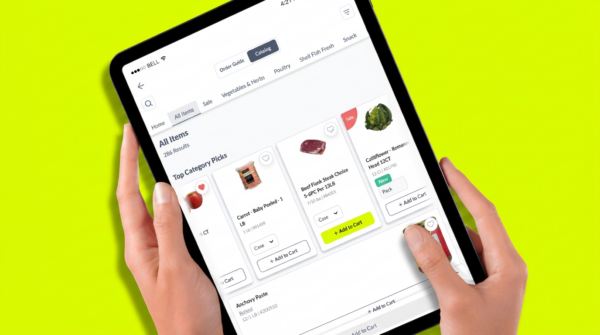
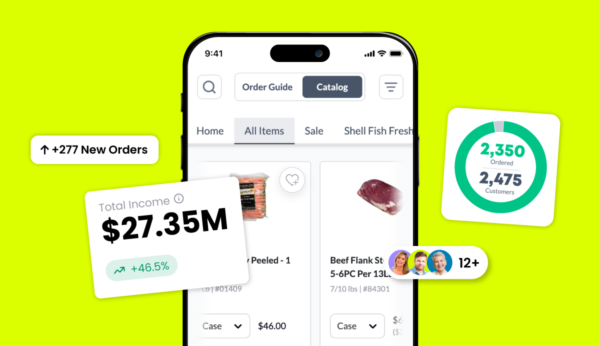
Operators place orders on your platform. They search for products. They see product images, read descriptions, check specifications. The quality of that experience directly influences whether they find what they want and whether they complete the order.
This is where catalog completeness becomes operationally crucial. A frozen vegetable product that has a clear supplier name, a detailed product description, a high-quality image, and accurate pricing converts better than a generic listing with missing information. An operator who can see that the mozzarella they’re ordering is certified for kosher use and comes in three different moisture levels is going to order more confidently than an operator looking at a blank product page.
The data you’re collecting from operator searches, clicks, and purchases tells you which catalog gaps are actually hurting conversion. Which categories are getting searched but not ordered? Which suppliers are being looked at but not selected? That’s information. That’s where your DSRs should focus enrichment effort.
Your catalog’s conversion rate is measurable, and it’s a leading indicator of operator lifetime value.
Building a Catalog Maintenance Discipline
Most distributors don’t have a catalog maintenance discipline. They have a catalog, and someone maintains it reactively when there’s a problem. This is backward.
The distributors pulling away from their competitors have a different approach. They have someone responsible for catalog health. Not product selection, which is a buying decision. Catalog health—completeness, accuracy, freshness. Are product images high quality? Are descriptions detailed? Are specifications accurate? Is pricing current?
This is a 0.5-1 FTE role. One person spending 20-30 hours a week on catalog enrichment drives measurable improvement in conversion and operator retention. Some of that work is adding missing information. Some of that work is connecting to manufacturer feeds. Some of that work is removing duplicate or obsolete entries.
The manufacturers who are part of your ecosystem should be part of this discipline. Your top 50 suppliers—the ones you do serious volume with—should have quarterly check-ins about catalog data. Are their product images current? Are specifications accurate? Are there new products that should be in your catalog? This is a partnership conversation, not a compliance check.
When you build this discipline, something happens. Your catalog becomes a conversation with your manufacturer partners instead of a burden you’re carrying alone. You’re asking them to help you represent their products accurately. They have incentives to do it. They want their products ordered.
The Catalog and Manufacturer Campaigns
This is where the full value comes together. When your catalog is complete, accurate, and connected to your manufacturers, that infrastructure enables something else entirely: coordinated campaigns.
A manufacturer wants to introduce a new sauce to your operator base. Historically, this required manual outreach. Your DSRs would tell you they were pushing the product. You’d hope some operators tried it.
With a rich catalog and manufacturer-connected infrastructure, it becomes coordinated. The manufacturer creates a campaign. They promote it to the right operators based on purchasing history and product category. They measure engagement in real time. They see which operators are trying it, which are buying it repeatedly, which are passing.
The ROI on this is 13.9x. For every dollar of manufacturer budget spent, we see roughly $14 in incremental sales. This doesn’t happen if your catalog is incomplete or if your operator data isn’t connected to your product data. It only works when the three pieces—rich catalog, operator intelligence, and manufacturer partnerships—are connected.
Starting Where You Are
If your current catalog is incomplete, you don’t need to overhaul everything at once. You need a systematic approach.
Start with your top 500 SKUs. Make sure every one of them has a complete product description, at least one high-quality image, pricing information, and any critical specifications. If supplier names are different across your system and your manufacturer’s data, normalize them. Get those 500 products to “catalog excellence” standard.
Then expand. Move to the next tier of products by volume or margin. Same standard: complete information, quality images, accurate data. This is a 6-12 week project for one person. By the time you’re done, you’ve set a quality standard that new products can be measured against.
The third step is connecting to your manufacturers. Tell them what you’re doing. Ask them to help you maintain accuracy on their products. Create a feedback loop. When an operator has a question about a product specification, route that question back to the manufacturer. They’ll update their data. That update flows through to your catalog. The next operator sees current information.
This is how catalogs go from static to dynamic. This is how they become assets instead of burdens.
If you’re curious about what a manufacturer-connected catalog infrastructure looks like in practice, we’d be happy to walk you through how the network operates at scale.