




In-App Promotions Aren’t Revenue

TLDR
- Distributor-funded promotions reduce your margin. They don’t grow revenue.
- Real revenue creation is when manufacturers fund campaigns because the ROI works for them.
- 13.9x ROI means manufacturers keep coming back — without touching your margin.
- This only works at scale. Small networks can’t attract manufacturer investment.
- The long-term winners are building tools for manufacturers, not just operators.
The Promotion Illusion
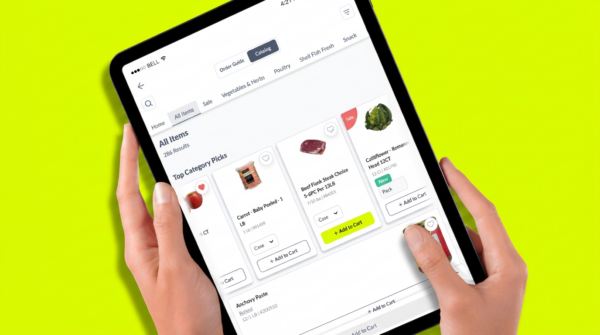
Some platforms are pitching distributors on in-app promotions as revenue creation. The pitch is appealing: “Run coupons. Highlight manufacturer products. Drive volume. Capture the margin uplift.”
There’s a problem with this logic that nobody’s saying out loud.
When a distributor funds promotions, they’re not creating revenue. They’re shifting costs. They’re taking margin that already belonged to them and moving it to a customer acquisition line item. If a restaurant was going to buy product from you anyway, and you discount it 15% to make it appear featured in your app, you’ve reduced your margin by 15% to achieve something that didn’t increase actual revenue.
Real revenue creation looks different.
Real revenue creation is when a manufacturer funds the promotion because they’re reaching customers they couldn’t reach before, and the ROI is measurable in their spreadsheet. That’s a completely different economic model.
The Cost-Shifting Problem
Let me be explicit about how in-app promotions work when the distributor is funding them.
Your platform features a promotion: 15% off a specific brand’s pasta for operators in Region A. You’re trying to drive trial. The manufacturer didn’t pay for this promotion. You did. You’re hoping the volume uplift compensates for the margin reduction.
Here’s what actually happens at scale: some volume increases, but not as much as you need to break even on the margin loss. The customers who take advantage of the discount were probably going to buy the product at regular price anyway. The operator gets an unexpected 15% discount and you get reduced margin.
The only winner is the operator. The manufacturer got a low-cost customer acquisition moment. You absorbed the cost.
“When you’re funding promotions, you’re not creating revenue. You’re paying for shelf space that already belongs to you.”
This problem compounds across a hundred small promotions. Each one individually seems fine. In aggregate, they’re a profit leak that your P&L might not even highlight clearly because it’s buried in “promotional spend” or “customer acquisition cost.”
The distributors that have controlled this problem aren’t the ones running fewer promotions. They’re the ones who got manufacturers to fund them.
That reason doesn’t come from your e-commerce platform. It comes from what’s happening above it.
What Manufacturer-Funded Campaigns Look Like
The economics are flipped when manufacturers are paying.
A manufacturer wants to drive trial of a new product, or increase share in a category, or reach operators they haven’t penetrated yet. They have marketing budget. They can either:
A) Send a sales rep to talk to distributors, who send their sales reps to talk to operators. Expensive, slow, not scalable.
B) Run a digital campaign to operators through a distributor platform that reaches thousands of operators simultaneously, with real-time tracking of which operators respond and which products move.
Option B is infinitely more cost-effective. The manufacturer sees immediate ROI. They’re not spending distributor margin. They’re spending their own budget. The economics work for them because they can see exactly which operators are responding, what’s converting, and whether the investment was worth it.
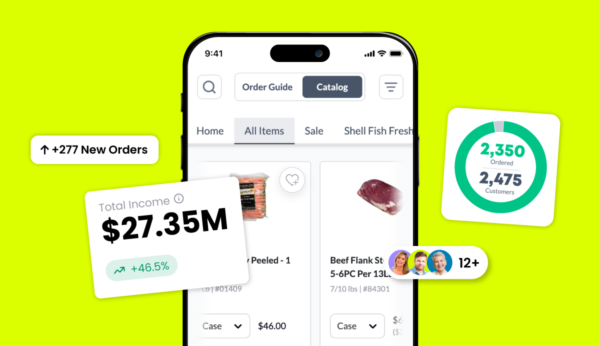
We’re tracking 13.9x ROI on manufacturer-funded campaigns across our network. That means every dollar a manufacturer invests drives fourteen dollars in incremental sales. Those aren’t dollars you’re funding. Those are dollars manufacturers are choosing to spend because the channel works.
“The difference between a cost-shifting promotion and a revenue-creating campaign is whether a manufacturer is willing to fund it because they believe in the ROI.”
When a manufacturer sees 13.9x ROI on a campaign, they don’t run it once and move on. They run it continuously. They expand budgets. They test variations. They compete with each other for share in your operator base. That’s when digital ordering becomes a revenue driver instead of just a fulfillment channel.
Why This Only Works at Scale
Manufacturer-funded campaigns don’t work at small distributor network sizes. A manufacturer won’t fund a campaign to reach 500 operators. The economics don’t work. The minimum viable operator base for a manufacturer to see ROI is in the thousands.
This is why scale matters so much in foodservice platforms.
140,000 operators across our network is large enough that McCormick can run a global campaign and reach thousands of their target accounts. It’s large enough that competitive campaigns make sense—multiple manufacturers competing for share in the same operator base drives pricing discipline and forces innovation. It’s large enough that an algorithm can identify patterns worth targeting.
Smaller platforms stay stuck in the in-app promotion model because they don’t have the operator density to attract manufacturer investment. They’re forced to fund promotions themselves or run lean margins.
The distributors on large networks win not because they have better in-app mechanics. They win because they have access to manufacturer budgets that smaller platforms can’t attract.
The Three Revenue Levers
If you’re thinking about your digital ordering channel as revenue-generating, there are three distinct levers. Most platforms can execute on one or two. Real platform moats work across all three.
Lever One: Distributor-funded volume capture
Your goal is to shift transaction volume from phone calls to digital ordering. The economics here are straightforward: every digital order saves you call center costs and order-entry errors. The margin is the same as it was before. You’re just delivering it more efficiently.
This is table stakes. Every competent platform delivers on this.
Lever Two: Distributor-funded customer acquisition
You invest in promotions to acquire new customers or deepen existing relationships. You’re taking margin to drive volume or loyalty. This has to be disciplined because it’s pure cost to your business. The only way it works is if the lifetime value increase actually compensates for the acquisition cost.
This is where most platforms focus. It feels like revenue creation but it’s actually cost-shifting.
Lever Three: Manufacturer-funded growth
Manufacturers fund campaigns that reach your operator base. The economics are completely different because you’re not funding the promotion. The manufacturer is. Your role is connecting them to customers and tracking the ROI. You capture margin on the incremental sales the campaign drives.
This is where compound growth comes from. Once you’ve proven manufacturer-funded campaigns work at scale, the growth becomes self-sustaining because you’re not funding it. Manufacturers are.
Building for Manufacturer Investment
The platforms building for manufacturer-funded campaigns invest differently than platforms optimizing for in-app mechanics.
They’re building campaign management tools, not just promotion displays. Manufacturers need to run A/B tests. They need to see real-time performance. They need granular targeting capability. They need integration with their own marketing automation. They need to understand which operators responded and why.
A platform that treats promotions as a feature for operators to browse doesn’t enable this. A platform that treats campaigns as manufacturer marketing tools does.
The distributors winning at this are the ones who spend as much time building tools for manufacturers as they do building for operators.
This is counterintuitive—why would you optimize for manufacturers?—but the logic is airtight. Manufacturers with good tools to run campaigns will fund more campaigns. More campaigns means more operator engagement. More operator engagement means higher order frequency and higher order values. That margin compounds faster than any in-app promotion ever could.
The Long-Term Play
In-app promotions might feel like revenue creation in the short term. But they’re a short-term play. You’re extracting margin today at the cost of future flexibility.
Manufacturer-funded campaigns are the long-term play. You’re proving that your platform is the best channel for a manufacturer to reach operators. You’re proving it with numbers: 13.9x ROI means manufacturers keep coming back. Each successful campaign attracts more manufacturer investment. Each incremental campaign reaches more operators.
The distributors that will own their markets five years from now aren’t the ones that optimized for in-app discount mechanics. They’re the ones that built for manufacturer investment.
If you’re interested in seeing how manufacturer-funded campaigns actually perform in practice, and what the difference is between them and distributor-funded promotions, we’d love to share our data.